Catégories
Nouveau blog
Mots clés
Comprendre les haut-parleurs de plafond : réponses aux questions clés pour les systèmes audio modernes
March 17 , 2026
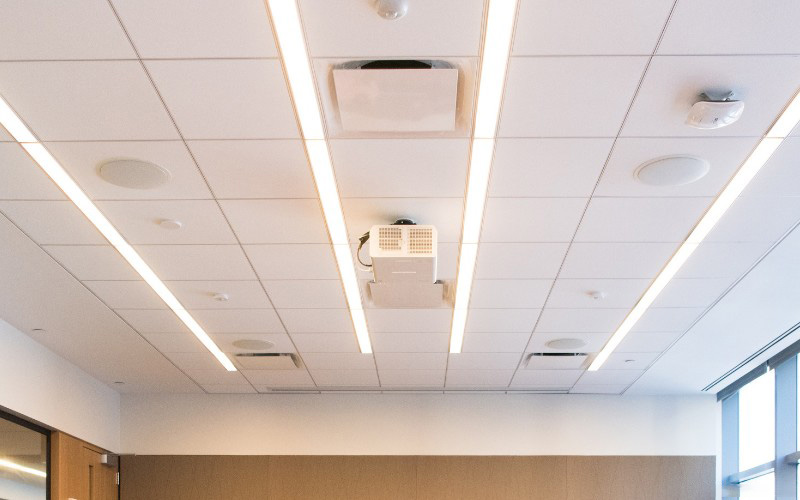
Les haut-parleurs de plafond sont devenus un choix courant dans les environnements commerciaux et publics, des bureaux et magasins aux écoles et hôpitaux. Leur design épuré et leur large couverture sonore les rendent idéaux pour la musique d'ambiance et la diffusion vocale. Cependant, lors de la conception ou de la mise à niveau d'un système audio, de nombreux utilisateurs se posent encore des questions pratiques sur le fonctionnement des haut-parleurs de plafond et sur le choix de la solution la plus adaptée.
Ce guide répond à plusieurs questions courantes et explique comment les haut-parleurs de plafond TONMIND peuvent être utilisés dans le cadre d'un système de sonorisation basé sur IP.
Un haut-parleur de plafond est conçu pour une installation encastrée, assurant une diffusion sonore homogène sans encombrer les murs ni le sol. Les modèles traditionnels utilisent généralement un câblage analogique et des amplificateurs externes, tandis que les systèmes plus récents, notamment les solutions de haut-parleurs IP, fonctionnent via une infrastructure réseau.
Les enceintes de plafond TONMIND sont conçues sur la technologie IP, permettant la transmission des signaux audio, de l'alimentation et des commandes via un seul câble Ethernet grâce à la technologie PoE. Cela simplifie considérablement l'installation tout en améliorant l'évolutivité.
L'une des questions les plus fréquemment posées est de savoir s'il faut choisir un haut-parleur de plafond de type IP ou analogique.
Les haut-parleurs analogiques de plafond nécessitent généralement :
●
Amplificateurs externes
●
Câblage complexe (lignes d'alimentation et audio séparées)
●
Flexibilité limitée pour l'expansion
En revanche, les solutions d'enceintes IP TONMIND offrent :
●
Amplificateurs intégrés et traitement DSP
●
PoE pour l'alimentation et les données via un seul câble
●
Intégration facile aux réseaux existants
●
Contrôle et surveillance à distance
Plus important encore, les systèmes basés sur IP prennent en charge les protocoles SIP, permettant une communication transparente avec les systèmes VoIP pour les fonctions de radiomessagerie et d'interphone.
De nombreux utilisateurs pensent que les haut-parleurs de plafond servent uniquement à la lecture audio, mais ce n'est plus le cas.
Grâce aux appareils TONMIND compatibles SIP, les haut-parleurs de plafond peuvent prendre en charge la communication audio bidirectionnelle lorsqu'ils sont équipés de microphones intégrés ou externes. Ils conviennent ainsi aux applications suivantes :
●
Communication de sécurité
●
Intervention d'urgence
●
systèmes de points d'assistance
Grâce au protocole SIP, le système peut se connecter directement aux téléphones IP, aux centres de contrôle ou aux appareils mobiles, permettant une interaction en temps réel sur l'ensemble du système de sonorisation.
Le nombre d'intervenants dépend de plusieurs facteurs :
●
Taille et agencement de la pièce
●
hauteur sous plafond
●
Niveau de pression acoustique souhaité
●
Application (musique de fond vs. sonnerie)
Dans les environnements où la parole est primordiale, on privilégie généralement un plus grand nombre d'enceintes à faible volume pour garantir une clarté optimale. Pour la musique, un nombre réduit d'enceintes performantes peut suffire.
Les systèmes IP modernes simplifient l'extension
,
Des haut-parleurs supplémentaires peuvent être ajoutés au réseau sans modification majeure du câblage, ce qui les rend idéaux pour les projets en pleine expansion.
L'installation a toujours été l'un des plus grands défis, mais la technologie IP a simplifié le processus.
Les haut-parleurs de plafond TONMIND sont compatibles avec :
●
Déploiement PoE (installation par câble unique)
●
Montage standard au plafond avec découpe
●
Configuration réseau plug-and-play
Cela réduit le temps de travail et élimine le besoin de câblage audio complexe, notamment dans les projets de grande envergure.
Oui, les solutions audio IP modernes peuvent souvent s'intégrer aux plateformes de sécurité.
Les haut-parleurs de plafond TONMIND sont compatibles ONVIF, ce qui permet leur intégration aux systèmes de gestion vidéo (VMS) et aux plateformes de surveillance. Ceci ouvre la voie à des cas d'utilisation avancés tels que :
●
Alertes audio déclenchées par des événements de sécurité
●
Annonces en direct liées aux zones de caméras
●
Contrôle centralisé associé aux systèmes de vidéosurveillance
En combinant l'audio et la vidéo, les entreprises peuvent créer un environnement de sécurité plus réactif et intelligent.
TONMIND privilégie les solutions audio entièrement intégrées aux produits autonomes. Ses haut-parleurs de plafond sont conçus pour faire partie d'un système de sonorisation IP complet et offrent :
●
Communication SIP pour l'intégration avec les systèmes VoIP
●
Compatibilité ONVIF pour l'intégration de sécurité
●
Audio haute qualité avec DSP intégré
●
Évolutivité flexible pour les projets de toute taille
Que ce soit dans une chaîne de magasins, un bureau d'entreprise ou un établissement public, les solutions TOMNIND offrent des performances fiables et un déploiement simplifié.
Les haut-parleurs de plafond ne sont plus de simples dispositifs audio passifs. Grâce à l'évolution de la technologie des haut-parleurs IP, ils sont devenus des éléments intelligents au sein d'un système de sonorisation connecté.
Lors du choix d'une solution, il est utile de prendre en compte des facteurs tels que l'intégration système, l'évolutivité et les capacités de communication, en plus de la qualité sonore. Grâce à leur compatibilité avec des protocoles comme SIP et ONVIF, les haut-parleurs de plafond TONMIND s'intègrent facilement aux systèmes de bâtiments intelligents et permettent des déploiements audio plus flexibles.